Entries written by Courtney Henderson and curated from articles by the authors indicated below.
Family History Month often brings great opportunities to improve your genealogy skills, find out about new resources and meet others who share your passion for the past! In 2001, Congress first passed a resolution, introduced by Sen. Orrin Hatch of Utah, who wrote, “By searching for our roots, we come closer together as a human family.” Since then, Family History Month as been observed annually during the month of October.
Check program schedules for your local library and genealogical society to see what’s going on near you. If you don’t have time to head out to a Family History Month event, here are plenty of ways to acknowledge the holiday at home by working on your own family story.
Table of Contents
- Dedicate a full day to in-person research
- Discover the best genealogy websites for beginners
- Have children interview a relative
- Organize your family photos
- Complete a genealogy task on your lunch hour
- Engage kids with a genealogy activity
- Tackle a project that will leave a family history legacy
- Honor an ancestor’s memory by creating an online memorial
- Learn about (and prepare) a favorite family recipe

Dedicate a Full Day to In-Person Research
Marcia Yannizze Melnyk
For all the internet’s charms, it doesn’t have everything you need to find your family tree. Eventually, you’ll have to pack your bags, buckle your seat belt and get yourself to the state archives or library that has your ancestors’ records. Here are three steps you will want to follow as you research.
1. Find Out Which Records Can Be Found Where
Keep a running list of records you need, and which repositories hold those records. You can search online catalogs or finding aids for most facilities, or request brochures outlining their collections. See if you can find any indexes to the records online or at your local library. Here are the state and local facilities you’re most likely to visit:
- State archives and libraries
- State vital-records offices
- State historical societies
- FamilySearch Centers
- Local libraries and societies
2. Prepare Your Research Strategy
You’ve got a limited amount of research time when you’re away from home, and it’s easy to become overwhelmed in a large, busy facility. Familiarize yourself with the library and organize your research by following these suggestions:
- Prepare a document of information on the facility: To preserve precious research time, you might gather information about what to expect at the facility; that way, you are not scrambling to find what you need when you get there. Take note of the documents they have, where to find them, and whom you can reach out to access them if needed.
- List your research goals for the visit: Having concrete goals will allow you to stay focused on specific research tasks and objectives with fewer distractions or detours. Have your goals written somewhere you can readily access them. You might even create a checklist that lets you check off research tasks as you complete them.
- Develop a resource organization strategy: When you have multiple tabs open and several different documents set out before you, you can easily get overwhelmed. Before embarking on your research trip, develop a system for keeping your resources neat. You might opt for a color-coded spreadsheet or physical folders.
3. Develop Your On-site Research Routine
After a few trips to libraries and archives, you’ll develop a comfortable research routine. These tips work well:
- When you arrive, stake a claim: Find a place to get set up that is both comfortable and practical. Be sure to lay out all of your resources in a way that will be easy for you to manage and that will ensure that you don’t lose anything important.
- Get an idea of the facility’s setup: Getting a feel for the facility online is one thing; however, once you are there, you may want to walk around to see where everything is located–different resources, computers, even bathrooms.
- Get down to business: Start your research when you feel properly situated! Get your water or coffee, put on that music or podcast, and start digging into those resources.
More Resources
Library of Congress — Local History & Genealogy Reference Services
FamilySearch Wiki — United States Archives and Libraries
American Library Association — Genealogy

Discover the Best Genealogy Websites for Beginners
Based on a list by Sunny Jane Morton
If you’re just starting to research your family history, you need a search strategy. There are so many places to go for online genealogy records and websites to learn about your heritage. Here are several to get you started:

Websites for Building your Family Tree

Websites for DNA Tests

Websites for Learning More about Genealogy
Cyndi’s List
Family Tree Magazine
Google
ThoughtCo
Your DNA Guide

Websites for Exploring Regional and Heritage Resources

Websites for Beginner-Friendly Records
BillionGraves
Chronicling America
Find a Grave
Fold3
GenealogyBank
NewspaperArchive
Newspapers.com
Also be sure to review our 101 Best Genealogy Websites.
More Resources
AncestralFindings.com — The Ten Best Genealogy Websites for Beginners
The New York Times — How to Dig Up Family History Online

Interview a Relative
Diane Haddad
Not only do family interviews bring families closer, they’re also a great way to learn about your family history and history in general. Interviews are also a great way for adult genealogists to fill in holes in their family history research, especially during family reunions.
The best part is that anyone can conduct an interview with a relative. You might even encourage your child or grandchild to brainstorm some questions and ask them. A reluctant interviewee may be more likely to open up when the interviewer is a younger family member.
Setting up an interview may feel like an intimidating endeavor if you have never done it before. Fortunately, we have an excellent guide to help you through the process from start to finish.
More Resources
American Ancestors — Conducting a Family History Interview
FamilySearch Wiki — Creating Oral Histories
Trace — Oral History: Beginner’s Guide to Interviewing Your Family

Organize Your Family History “Stuff”
Maureen A. Taylor
What family history enthusiast can’t claim to own boxes of “stuff,” which may include photos, heirlooms, records and other items that create clutter? While these items may make for excellent stories and research opportunities, they also may take up a lot of precious space.
Here is a list of things that you may consider devoting time to organizing during Family History Month:
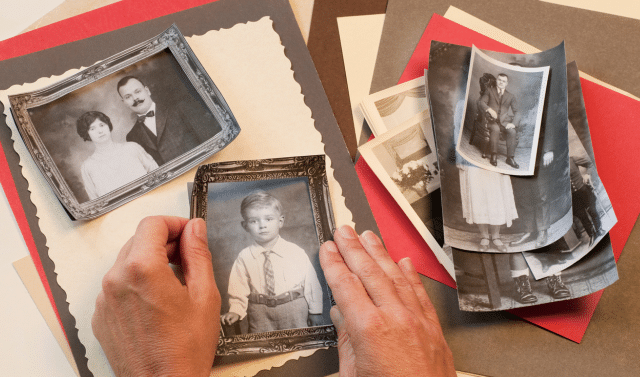
- Photos: Photos are fun to look at and can offer a glimpse into a time unfamiliar to you. They can also grow frustrating to deal with if you have too many and nowhere to put them. Here are eight steps to take your family history photo collection from messy to manageable.
- Paper Files: Every little piece of paper adds up fast. Think documents, notes, journal entries, and more. Fortunately, you can develop filing systems to help manage all those loose papers and even declutter your workspace with a clear strategy.
- Digital Files: Just because it exists on a computer does not mean it isn’t taking up space or can’t get lost in a sea of other documents. The more time you spend researching, the more notes and sources that are likely to accrue. You can make keeping track of these items more manageable by organizing your digital files.
- Keepsakes: You may have several items that are considered “family heirlooms” but no idea what to do with them or how to keep them safe. This guide provides tips for storing everything from quilts and clothing to collectibles and china.
More Resources
Simply Spaced — How To Organize & Store Your Printed Photo Collection
Better Homes and Gardens — Organize Photos in a Snap with These Easy Tips from the Pros

Devote a Little Time to Genealogy Every Day
David A. Fryxell
Not all of us enjoy the luxury of afternoons open for poking around in libraries, free hours to scroll through microfilm, or whole days to surf the genealogy riches of the internet. Some of us must work to support our genealogy habits and buy such niceties as food and shelter.
But you still can make progress in pursuing your pedigree. In just an hour, you can push a bit deeper into the past and uncover something new about what’s old. For example, here are 14 genealogy tasks you can do on your lunch break.
Some other tasks may include:
- Looking Up Important Names or Places that Come Up in Your Research: Whether you use a tool like Ancestry or the old trusty Google, you never know what you might find from a search that takes just a few minutes of skimming. If you want to avoid falling down any research rabbit holes, bookmark important pages for later.
- Write a Paragraph (or Two) About Your Family History: Instead of trying to tackle one enormous writing project all at once, try spending 15 minutes on one specific topic each day. For example, one day you might focus on writing about an ancestor’s birthplace and childhood; the next, you turn your attention to their work history.
- Look for a Different Record Type: Perhaps you have spent most of your time devoted to military records. Consider spending 15 minutes on something you never considered before, like church records or census records. You never know what you may find.
More Resources
Are You My Cousin? — 15 MORE Quick Genealogy Tasks To Do In 15 Minutes
The Occasional Genealogist — 50 Genealogy Tasks You Can Do In 15 Minutes or Less

Engage Kids with a Genealogy Activity
You know your enthusiastic cries of “Let’s look at vital records indexes!” probably aren’t going to make your kiddos’ pulses race. So how do you show them that learning about dead relatives can be just as fun as playing video games? These six activities can be tailored to any age, or you can explore more ideas specific to different age groups:
- Excavate Grandpa’s Attic or Basement: Countless treasures and stories hide among the old “junk” packed away in boxes and trunks. Let kids root through Grandma’s hat boxes, Grandpa’s model train set, old clothes and other treasures. These mementos give children a glimpse of their relatives’ younger years and show them how times have changed. Make a special effort to pull out items from a parent’s childhood—Mom’s Barbie dolls or Dad’s high school science project, for example—so kids can see what their mother or father was like at their age.
- Tour the Cemetery: Visiting family grave sites shows children that their ancestors were real people. They’ll also learn about the clues found in cemeteries, a lesson they’ll appreciate if they start doing genealogical research on their own. Point out ancestors’ tombstones first, then other family members’. Explain everyone’s relationships to each other, and how they’re related to the kids (“This is Great-great-grandpa’s sister Mary. That would make her your third-great-aunt.”). Bring a book on gravestone art such as Allan Ludwig’s Graven Images: New England Stonecarving and Its Symbols (Utah State University Press) so the children (or you) can look up what the symbols on the headstones mean.
- Throw a Birthday Party for an Ancestor: A birthday celebration is a fun way to teach kids about an ancestor’s life and times. You might start with your grandmother or grandfather—someone you knew but the kids didn’t—and celebrate the way the family did when that relative was still alive. Maybe even wrap up a few mementos of that person as “presents”; when the kids open them, you can share the story behind them. Or choose an ancestor who lived during a time period kids would recognize, such as the Civil War or Colonial times, and celebrate the way your ancestor might have back then.
- Prepare Great-Grandma’s Favorite Family Recipe: Don’t keep Great-grandma’s apple pie recipe a secret—at least not from the kids. Instead of prompting thumb-wrestling matches over who gets the last piece, your family’s generations-old favorite recipe can keep Grandma alive in her great-grandchildren’s memory, even though she may have died years before they were born. Children will learn that creativity and patience were important ingredients in heirloom recipes.
- Make a Family Trivia Game: A family trivia game is a good activity for family gatherings because you can draw on many relatives’ memories and experiences. Everyone can brainstorm questions, focusing on close family members first: What is Dad’s favorite color? Which famous singer did Aunt Lucy write love letters to? Use your genealogy information to extend the questions to more distant generations: Which country did Great-great-grandpa Heinrich emigrate from? Then let the kids turn the trivia into a game.
- Create a Time Capsule—in Reverse: If your ancestors had left a time capsule, what would have been in it? Pick an ancestor and try to create a snapshot of his or her life. If you have objects such as photographs, recipe cards or diaries, make copies and include them in the time capsule. Kids can also re-create “artifacts” from the chosen ancestor’s lifetime using historical and genealogical facts. For example, they could use a marriage date and place to make up a wedding invitation. Create a newspaper page detailing the important events of the time. Show the trendy fashions that ancestor might have worn. Have kids draw or print out a picture of what a dollar looked like (click here for images of historical US currency) and find out what it would be worth in today’s money. Display the “artifacts” in a scrapbook or on a family website.
More Resources
National Archives — Genealogy Activities For Kids!
Scholastic — 5 Cool Apps & Websites to Research Family History With Your Kids
Family Locket — Family History Ideas for Children and Teens

Tackle a Family History Legacy Project
Sharon DeBartolo Carmack
You’ve spent years digging up data and stories to breathe life into the grandparents and great-grandparents who’ve made your existence—and your children’s—possible. But what are you doing to ensure your family’s legacy will be around after you’re gone? What are you doing to ensure your family history treasures survive you? Here are several projects that will help you leave a legacy for your family:
- Start Scrapbooking: Only your imagination limits the scrapbooks you can create. There’s the standard heritage album, but also consider these five themes: Family reunion scrapbook, school scrapbook with yearbook pages and memorabilia, cemetery scrapbook with grave marker photos, plus death certificates and obituaries, immigration and migration scrapbook with maps, passenger lists, passports and naturalization records, and house scrapbook with deeds, pictures and information on the people who lived in each house.
- Assemble an Album or Create a Photo Book: Photo albums and books are a natural legacy project. Just be sure to identify the photos with names, dates and places.
- Transcribe Diaries and Letters: Are you one of the lucky genealogists who’s inherited an ancestor’s diary or letters? Not only do you need to think about preserving them for the future, but you also should consider ways to make them accessible to other family members.
- Put your Family History into Words: There are many forms your writing can take, including essays, articles, letters, and even a family history book.
- Know Your Needlework Heirlooms: If you’ve inherited a family tree sampler, make sure you’re displaying it in archival materials away from sunlight, or storing it in acid-free materials. You also can create your own family tree sampler or quilt using patterns from your local craft store.
- Write your Life Story: Let your descendants know all about you with a personal writing project. Such a project may be a memoir or autobiography, diary, or research journal.
- Inventory Ancestral Artifacts: Now’s a good time to create an inventory of your family artifacts, even those in your relatives’ possession. Photograph each item and record the following information: how the item came into the possession of its current owner, the owner’s name and address, a description of the item, family stories associated with it, the date it was made or acquired, and its provenance—that is, the heirloom’s history.
- Display Family Photos: As you collect photos of your ancestors, frame their faces for a family tree wall display.
- Digitize Your Research: Digitally preserving your family history is an easy way to share it with family members who live near and far. Compile scanned photographs and documents along with family stories, and create a family website.
- Create a Family Newsletter: Do you send an annual holiday letter summarizing your kids’ and spouse’s activities for the past year? File each one with your family history research, or keep a notebook of letters that you’ve written and received from others.
- Create a Family History Calendar: Buy a special calendar to record ancestral events, such as births, marriages and deaths.
- Create Your own Family Newspaper: Fill it with clippings you’ve found about your ancestors, including obituaries, news articles, marriage and birth announcements. Publish you paper annually as a holiday tradition.
- Write a Family Health History: By writing a family health history, you can help your loved ones stay well while sharing genealogical facts.
Feeling a little more crafty? Check out these DIY family history crafts.
More Resources
Thought Co. — How to Write Your Family History
Ancestral Findings — 13 Best Genealogy Projects for a Long Weekend
Country Living — 12 Family Tree Ideas You Can DIY, Even If You Didn’t Get the Creative Gene

Honor an Ancestor’s Memory with an Online Memorial
Sunny Jane Morton
Online memorials are a lovely option for family and friends who want to share stories of a deceased loved one. There are a lot of options these days and many of them are very easy to use. If you’re looking to create a page for someone you’ve lost, these are some of our favorite options.
Here are some things that you can share with an online memorial:
- Photos: Find pictures that capture a loved one enjoying their favorite activities, experiencing important life events, or just being themselves.
- Stories: Keep them alive in memory by sharing stories that made their lives extra special.
- Condolences: Most memorial platforms give people a place to express sympathy and offer their well wishes to the deceased’s family.
More Resources
Everplans — The Top 10 Online Memorial Websites
Love to Know — Online Memorial Sites to Celebrate Your Loved One’s Life
Wix Blog — How to Create a Meaningful Memorial Website in 8 Steps

Learn About (and Prepare) a Favorite Family Recipe
With so much time being spent in the kitchen and with family recipes on our minds, now is an especially good time to preserve your family recipes and the stories that go with them. Here are easy steps for finding, saving and celebrating your family’s “resilience recipes.” You might even consider inviting over family or close friends to try the recipe and even invite them to bring dishes inspired by recipes that their ancestors used to make! Put all the recipes together in a family recipe cookbook.
More Resources
FamilySearch Blog — Discover Your Family’s Recipe Story
The Family History Guide Blog — The Power of Family Recipes
Family Tree Video — Family Recipes: Celebrating Family History & Tradition
A version of this article was posted online in October 2017. Last updated: September 2026.
Related Reads